Aquestive Therapeutics Reports Positive Topline Data from Part 1 of EPIPHAST Trial Evaluating AQST-109 Epinephrine Oral Film
- First and only orally delivered epinephrine product candidate AQST-109 continues to show rapid absorption with a median time to peak concentration (Tmax) of 13.5 minutes
- AQST-109 was safe and well tolerated
- Part 2 of the EPIPHAST trial commenced
EPIPHAST is a randomized, open-label, three-part adaptive design, crossover study in healthy adult subjects comparing the pharmacokinetics and pharmacodynamics of epinephrine delivered via Aquestive’s AQST-109 oral film compared to intramuscular injection of epinephrine. The study is being conducted pursuant to clearance from
In Part 1 of the EPIPHAST study, multiple oral film formulations and dosage strengths of AQST-109 were evaluated. As shown in the figure below, the lead formulation of AQST-109 rapidly reached clinically meaningful blood concentrations when delivered in two different physical configurations, with a median Tmax of 13.5 minutes and 22.5 minutes, respectively. Part 1 also demonstrated arithmetic mean maximum concentrations (Cmax) of 771 pg/mL and 580 pg/mL for the two configurations, or geometric mean Cmax values of 258pg/mL and 268pg/mL for the two configurations, respectively. These geometric mean Cmax and median Tmax values are consistent with those previously reported for approved injectable epinephrine devices such as EpiPen®.
As shown below, the healthy volunteers were also exposed to a 0.5mg intramuscular injection (IM) of epinephrine, allowing for a comparison with the pharmacokinetics, safety, and tolerability of the higher end of the approved dosage range of epinephrine, consistent with guidance received from the
The findings show that these two configurations of the selected AQST-109 formulation can deliver clinically meaningful blood concentrations of epinephrine sooner than that observed with the higher dose of epinephrine intramuscular injection, and in line with existing epinephrine autoinjectors, and without concerns for safety or tolerability.
“We are very pleased with the results from the first part of this study. We again showed pharmacokinetic results for AQST-109 that demonstrate delivery of epinephrine with the speed and absorption necessary for a rescue product,” said
“Anaphylaxis is a disease state that has faced a lack of innovation for decades. Epinephrine has been in use for more than a century, yet epinephrine auto-injectors are often underutilized due to various factors, including needle phobia, delayed administration, and failure to carry,” said
Aquestive has commenced Part 2 of the EPIPHAST study and expects to report topline results in the first half of 2022. Part 2 is a randomized, crossover design comparing AQST-109 12mg to epinephrine IM 0.3mg.
About Anaphylaxis
Anaphylaxis is a potentially life-threatening systemic allergic reaction, with an estimated incidence of 50 to 112 episodes per 100,000 people per year. The frequency of hospital admissions for anaphylaxis has increased 500-700% in the last 10-15 years. The most common causes of reactions that can include anaphylaxis are medications, foods (such as peanuts), and venom from insect stings. Epinephrine injection is the current standard of treatment intended to reverse the potentially severe manifestation of anaphylaxis, which may include red rash, throat swelling, respiratory problems, gastrointestinal distress, and loss of consciousness.
About AQST-109
AQST-109 is a polymer matrix-based epinephrine prodrug administered as a sublingual film that is applied under the tongue for the rapid delivery of epinephrine. The product is similar in size to a postage stamp, weighs less than an ounce, and begins to dissolve on contact. No water or swallowing is required for administration. The packaging for AQST-109 is thinner and smaller than an average credit card, can be carried in a pocket, and is designed to withstand weather excursions such as exposure to rain and/or sunlight.
About
Forward-Looking Statement
Certain statements in this press release include “forward-looking statements” within the meaning of the Private Securities Litigation Reform Act of 1995. Words such as “believe,” “anticipate,” “plan,” “expect,” “estimate,” “intend,” “may,” “will,” or the negative of those terms, and similar expressions, are intended to identify forward-looking statements. These forward-looking statements include, but are not limited to, statements regarding the advancement and related timing of AQST-109 through the regulatory and development pipeline and clinical and business strategies, market opportunities, and other statements that are not historical facts. These forward-looking statements are subject to the uncertain impact of the COVID-19 global pandemic on our business including with respect to our clinical trials including site initiation, patient enrollment and timing and adequacy of clinical trials; on regulatory submissions and regulatory reviews and approvals of our product candidates; pharmaceutical ingredient and other raw materials supply chain, manufacture, and distribution; sale of and demand for our products; our liquidity and availability of capital resources; customer demand for our products and services; customers’ ability to pay for goods and services; and ongoing availability of an appropriate labor force and skilled professionals. Given these uncertainties, the Company is unable to provide assurance that operations can be maintained as planned prior to the COVID-19 pandemic.
These forward-looking statements are based on our current expectations and beliefs and are subject to a number of risks and uncertainties that could cause actual results to differ materially from those described in the forward-looking statements. Such risks and uncertainties include, but are not limited to, risks associated with the Company’s development work, including any delays or changes to the timing, cost and success of our product development activities and clinical trials for AQST-109 and our other product candidates; risk of delays in FDA approval of AQST-109, Libervant™ (diazepam) Buccal Film and our other drug candidates or failure to receive FDA approval; ability to address the concerns identified in the FDA’s Complete Response Letter dated
PharmFilm®, Sympazan® and the Aquestive logo are registered trademarks of
Investor Inquiries
ICR Westwicke
Stephanie.carrington@westwicke.com
646-277-1282
A photo accompanying this announcement is available at https://www.globenewswire.com/NewsRoom/AttachmentNg/f6674799-ad9d-4eec-8253-29861728ed69


Mean Baseline Adjusted Epinephrine Concentration
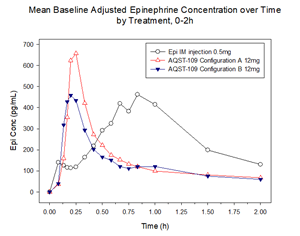
Mean Baseline Adjusted Epinephrine Concentration over Time by Treatment, 0-2h
Source: Aquestive Therapeutics, Inc.